What’s Wrong with the DIY Smart Home Market Today

Source: Engadget
In the years of being a fly-on-the wall inside a Venture Capital firm, I’ve seen a ton of pitches for new technology, the majority of which promise to save people time. One pitch-error I’ve encountered again and again is a CEO with a semi-delusional sense of what it actually takes to save time. For example:
So we’re a gift automation service. We’ll send you reminders when it’s time to order someone a gift, suggestions on what gift they might like, and take care of shipping, payment processing, gift wrap, and even returns or exchanges if the gift was a poor fit.
Before they even say it, I know what’s coming next.
All you have to do is open the app, add your people you’d like to gift, and voila! We’ll do the rest.
Did you catch it? While it sounded so quick and easy, look closer: in the same length of breath it took to say, “open the app” they equated the task of “add your people.”
Considering their proposed functions, that means adding names, birthdates, and mailing addresses — at minimum. When looking at flow from A-to-Z, they just asked the consumer to say the alphabet, pause between ‘O’ and ‘P’, and recite the Pledge of Allegiance — and most absurdly, to accept that as an equally weighted step. “Oh but they could import your 700 Facebook contacts to rifle through…” “Oh but they could import your phone’s 2,000 contacts to select from…” Both of which would take even more time. And what about the process of verifying the person hasn’t moved? What about the 99% of my contacts that I never added birthdays to? What about the fact that the time I spend sending a gift to someone is most likely shorter than the signup process at this point?
If you are selling your product as a way to save time, the real mis-step is glossing over just how much additional time you’re asking your user to devote to your “improvement” of a process they already complete on their own.
You can’t ever assume adding technology automatically reduces time-spend.

Can too much tech be a bad thing? (Photo credit)
I see this logic everywhere, from cheeky infomercials to very-respected enterprise SaaS, most often prefaced by the phrase “you simply have to…” or “all you do is…”
This is endemic in the IoT world. Every script states “you just plug in the device, open the app, completely-customize-and-setup-everything-you-didn’t-know-you-didn’t-want-to-devote-your-time-to, and voila!”
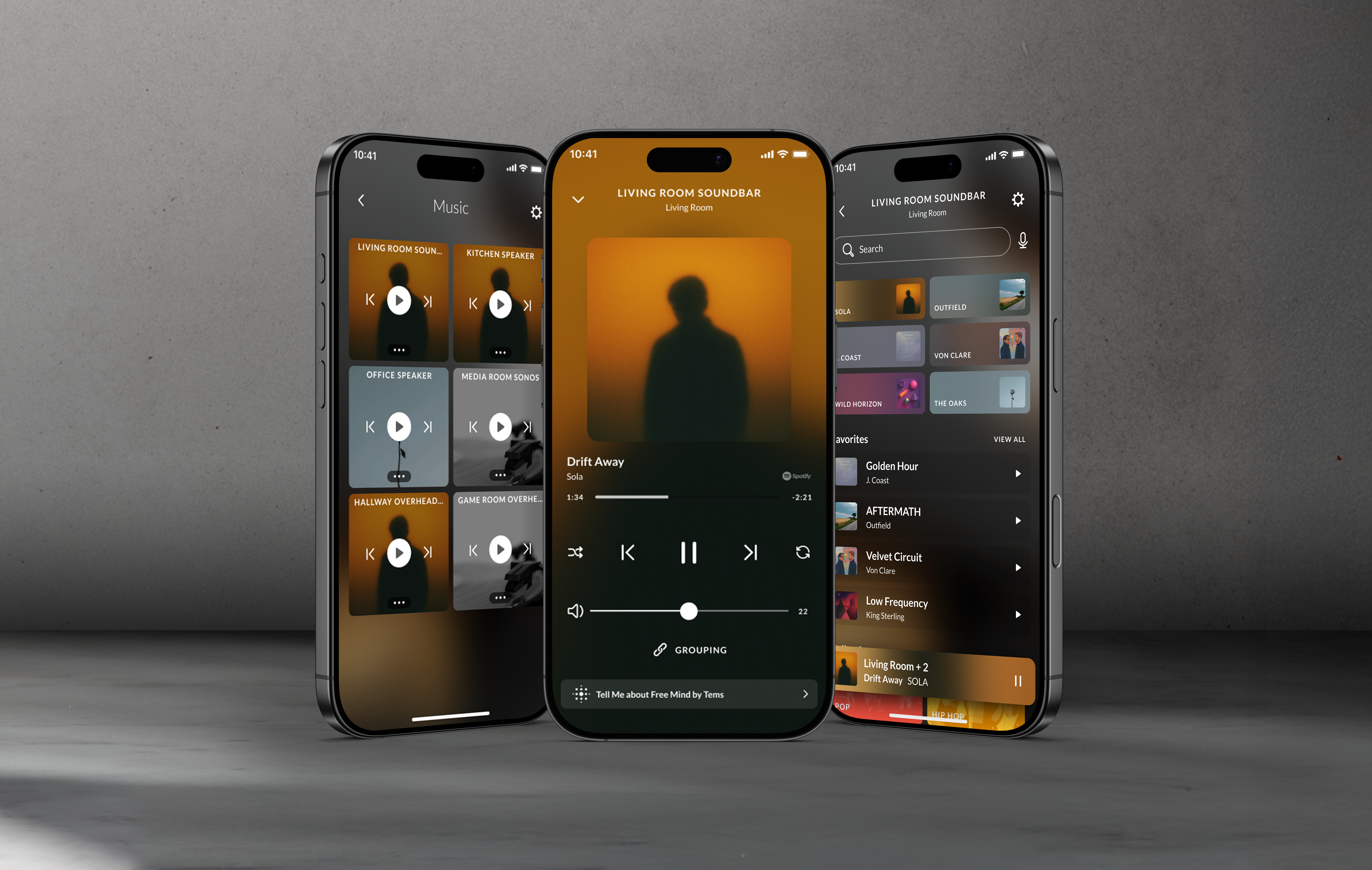
Here’s the truth about smart lights today: Want to turn on the lights? Grab your phone, unlock it, find the lights app — stop right there because the lights aren’t on and you’ve already spent more time than you would using a light switch. You’re not crazy for thinking about this. God forbid you walk in the front door and want to change both your lights, and thermostat, and turn on music. That’s three different apps and all their (potentially overwhelming) options to choose from.
This is why some people smart enough to handle great tech just don’t right now. Because it wasn't designed in the grander scheme of flow.
So let’s be objective here and think through smart-home flow. If you’re going to turn on lights, adjust your thermostat, and play music, sometime after you arrive home from work, you’re likely going to execute on those all fairly close to each other. Because in the greater flow, your mindset enters ‘home’, adjust accordingly, and once satisfied moves on to something else. Ex:
I’m home. Home is cold and dark. Make it warmer. Turn on the lights. I’ve got the White Stripes stuck in my head, play ‘Icky thump.’ Hmm, I’m hungry I should eat…
Then you’re off, flowing out of the thoughts regarding your home, into thoughts of what’s left to eat. Maybe later you’ll come back to thinking about your home. You’ll set the music, lights, and temperature for bed. But when your mind flows towards home comfort, it’s naturally going to be more in tune to it’s multitude of options, and want to do more than one thing at a time.
This is why I scratched my head when I found out Josh is the only voice activated AI platform to accept multiple smart devices AND multiple voice commands in one go. I can’t imagine anyone to have the patience to stand by their front door and access the thermostat app, the music app, the lighting app, all separately when they are just trying to leave. Do smart home apps think ‘smart’ outweighs ‘efficient’? It certainly won’t when there is a competing technology (your hand and the switch on the wall) readily available in everyone’s home.
And before you think this conversation can be snuffed with a “well this generation is just too lazy,” remember, I didn’t promise that gift app could save me time — they did. If a product’s pitch is that it saves time, it gives up the right to defend itself by claiming the customers aren’t devoting enough time using it.
If you haven’t started using smart home tech because you’ve thought through usability — I don’t blame you. Obviously it’s in Nest’s best interest to make a Nest app that works for Nest, and for the Philip’s app to only work for Philips’ products, etc. But if you’re thinking about how much of an impact efficiency and integration and flow can make in this realm, we want you to know, we at Josh are too. Flow is a very valid, and a very central part of the smart home design and usability experience, and it’s exactly why we’ve developed Josh.
If you’d like to demo the product to help unify your smart home devices, we’re accepting a limited amount of beta testers. Go to josh.ai/beta to see if your home qualifies. (If you want to go ahead and pre-order, check out josh.ai/preorder.)

This post was written by Sara at Josh.ai. Sara thoroughly enjoys branding, marketing, and all the nuances of communication, while holding a firm foundation in classic disciplines: efficiency, organization, and problem solving. She considers herself a consumer advocate in the world of product UI, and enjoys removing obstacles for the sake of the most zen user experience. Sara received her Bachelors degree from SMU.
Josh.ai is an AI agent for your home. If you’re interested in following Josh and getting early access to the beta, enter your email at https://josh.ai.